
Although other types of debt may be discharged at the conclusion of a Chapter 7 or 13 bankruptcy, student loans receive different treatment. Typically, it has been extremely difficult to get these loans wiped out as part of the bankruptcy process. The legal landscape is slowly shifting, and there are some exceptions that may allow you to qualify for student loan debt discharge. Your bankruptcy lawyer can review the circumstances of your case and advise you about how your student loans will be treated in your particular circumstances.

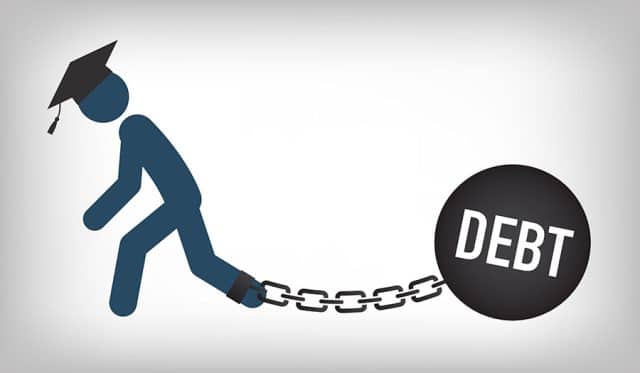
Student loans are approaching crisis level in the United States, as borrowers owe close to $2 trillion in total. Individuals may struggle to pay back what they owe, and they can run into even more difficulty if they suffer financial distress through job loss or unexpected medical bills. Although bankruptcy may not address student loans, having a very high debt load can push someone to seek protection in federal court.
It Is Difficult, But Not Impossible, to Have Student Loans Discharged in Bankruptcy
There is a common conception that student loans are not dischargeable in bankruptcy. This idea arises from decades of legal precedent, although it is not an absolute proposition. There are some circumstances in which it may be possible to have your student loans discharged, although they are very rare.
The legal presumption is that student loans are not dischargeable in bankruptcy, although you can present evidence that can overcome the general rule. The main inquiry that may allow you to see discharge of your student loans is the Brunner Test. The name comes from a 1987 case in which the court announced a three-prong test for when student loans can be discharged. You must meet each of the elements of the test to have your debt discharged in bankruptcy.
Inability to Maintain a Minimal Standard of Living
The first element of the Brunner test looks at your ability to earn enough money going forward to make regular monthly payments on your debt. Here, the court looks at the standard of living for you and your dependents if you are required to make student loan payments. You must maintain a minimal standard of living after these payments. The test does not necessarily mean that you must be impoverished after making your payments. It does mean that you must keep a bare-bones standard of living.
Here, a court will look at both your income and expenses in deciding whether you meet this prong of the test. A court will also analyze whether your expenses are reasonable or whether you are still trying to maintain a more luxurious standard of living.
Additional Circumstances Showing Hardship Will Persist
The court is not just looking at your circumstances at this current point in time. It is possible that you may be in a difficult situation now, but your finances may improve in the future. You must show that your current hardship circumstances will persist into the future, leaving you with a continued inability to pay back your student loans. You can prove that you have a lasting medical condition that will keep you from working in the future. You can show that you have a lack of marketable job skills that will allow you to earn a reasonable living, and you will be unable to turn the situation around with time or additional training. This prong of the test is often referred to as the “certainty of hopelessness.”
Good Faith Efforts to Repay
In addition to what your financial situation looks like both now and in the future, a court will also look at your past actions as the last part of the Brunner Test. You must show that you have made good faith efforts to repay your student loans in the past. Even if you cannot fully pay your obligations, you have to prove that you have at least tried to the fullest extent possible. Whether it is making some monthly payments, maintaining close communications with your lender, or trying an income-based repayment plan, if you can prove that you tried to repay your debt, you may meet this part of the test.

Despite Strict Tests, It May Still Be Possible to Have Your Student Debt Discharged
The Brunner test has historically been applied very strictly by the courts. They did not want the bankruptcy process to be used to escape a large student loan debt, since it will be unfair to lenders. It was thought to be virtually impossible to have student loans discharged in bankruptcy. In recent years, courts have somewhat softened how they apply the Brunner test. Increased sympathy towards those with high student loan debt and policy changes have somewhat shifted the discussion. Nevertheless, you are facing an uphill battle if you are seeking to discharge your student loans in bankruptcy.
Even if you cannot get your student loans themselves, bankruptcy can still help with your financial situation and your ability to pay these loans back. First, when you file for bankruptcy, the automatic stay goes into effect. All creditors must immediately cease collection efforts while the bankruptcy process is pending. You can have other debts discharged or agree to a payment plan for them, which will free up money for you to be able to pay your student loans. Your bankruptcy attorney can file for an adversary proceeding in which they present evidence that can show why your student loan debt should be discharged.
Contact a Florida Bankruptcy Lawyer Today
At Consumer Law Attorneys, our experienced bankruptcy lawyers guide you through your options, helping determine if student loans can be discharged or restructured. Protect your financial future, stop collection calls, and regain control of your life. Contact us today for a free consultation and take the first step toward relief. You can speak with a bankruptcy attorney by messaging us online or by calling us today at (877) 241-2200.